Exploring Eco-Friendly Water Heating Solutions in Shimonoseki
- 株式会社エビス商会

- 17 時間前
- 読了時間: 5分
For many households in Shimonoseki, the first sign that something needs attention is not a planned renovation but a daily frustration: hot water that runs out too quickly, utility costs that feel harder to justify, or a leak around an aging system. For families looking into 下関市 水道修理, those issues often reveal a bigger opportunity. Instead of simply replacing old equipment with a similar model, it can be worth stepping back and asking how the home heats water in the first place, and whether a cleaner, more efficient solution could serve the household better for years to come.
Why eco-friendly water heating deserves serious consideration
Hot water is one of the most constant demands in daily life. Bathing, washing dishes, laundry, and cleaning all depend on it, and because it is used so routinely, even small improvements in efficiency can have a meaningful effect over time. Eco-friendly water heating is not just about reducing energy use in the abstract. It is about creating a system that delivers dependable comfort with less waste, better operating logic, and a more thoughtful fit for the home.
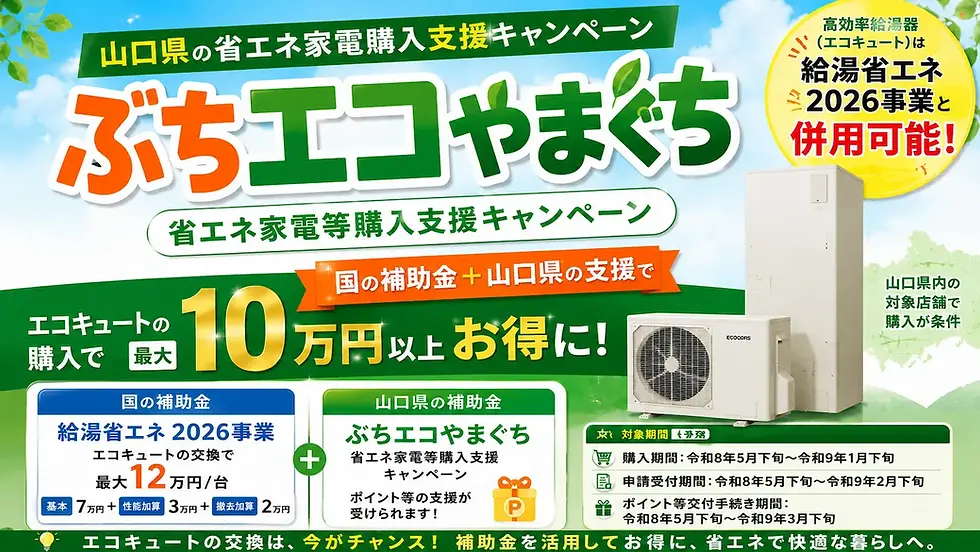
In Japan, one of the most familiar options in this category is EcoCute, a heat pump water heater that uses heat from the air to warm water and store it for later use. Rather than relying only on direct electric resistance, it works by moving heat efficiently, which is why it has become such an important choice for homeowners who want a more modern approach to domestic hot water. For properties in Shimonoseki, where many homes are balancing comfort, aging infrastructure, and long-term running costs, that shift can be especially relevant.
Eco-friendly water heating also supports a broader way of thinking about the home. When the water heater is upgraded, it often becomes easier to review pipe condition, bathroom use patterns, storage capacity, and whether the household's hot water habits have changed over the years. A replacement project, in other words, can do more than solve a single appliance problem.
Comparing the main water heating options
Not every home needs the same solution. The best system depends on the property's layout, household size, current utilities, and how hot water is used from morning to night. A simple comparison can make the decision clearer.
System | How it heats water | Strengths | Points to consider |
EcoCute | Uses a heat pump to draw warmth from the air and store heated water in a tank | Energy-conscious operation, stable hot water supply, well suited to long-term home use | Requires space for equipment, careful placement, and proper installation planning |
Gas water heater | Heats water directly and quickly when needed | Fast response, familiar system for many homes, compact in some configurations | Running costs and infrastructure needs vary; replacement may not address wider efficiency goals |
Conventional electric water heater | Uses electric resistance to heat stored water | Simple setup in some homes, widely understood | Often less efficient as a long-term choice compared with heat pump systems |
For households focused on sustainability and everyday efficiency, EcoCute often stands out because it combines practical comfort with a lower-waste heating method. That does not mean it is automatically the right answer in every case. What matters is whether the home can support the system properly and whether the installation is designed around real use, not just catalog specifications.
What to check before installing an eco-friendly system
A water heater replacement should never be treated as a one-size-fits-all job. The best results come from understanding the home's actual conditions first. This is particularly important in existing houses, where the age of piping, available space, and placement of utility connections can shape the project as much as the equipment itself.
Key points to review
Available space: EcoCute systems require room for both the heat pump unit and the storage tank. Access routes, outdoor placement, and maintenance clearance all matter.
Plumbing condition: If the home's water pipes show signs of corrosion, leakage, or uneven pressure, those issues should be reviewed before or during installation.
Electrical readiness: An upgraded system may require checks to confirm that the electrical setup is suitable and safely configured.
Household demand: A family with frequent baths and heavy laundry use has different hot water needs from a smaller household with lighter daily demand.
Noise and location planning: Outdoor equipment should be positioned thoughtfully, with consideration for airflow, accessibility, and the surrounding environment.
It is also wise to think beyond the immediate replacement. If a bathroom renovation, kitchen update, or broader water-related repair is likely in the near future, combining that planning can reduce disruption and create a more coherent result. A water heating system performs best when it is part of a well-organized household infrastructure, not an isolated upgrade.
Planning EcoCute installation alongside 下関市 水道修理
One of the most overlooked parts of a water heater project is the connection between the appliance and the condition of the plumbing around it. Homeowners sometimes focus only on the unit they want to replace, when the real issue may involve aging valves, unstable water pressure, scale buildup, or pipe joints that no longer inspire confidence. In those cases, a heater upgrade and 下関市 水道修理 should be planned together rather than separately.
Because hot water systems are directly tied to pipe routing, drainage, and overall water flow, it helps to consult a local specialist who understands both EcoCute installation and 下関市 水道修理 as part of one connected home system. That integrated perspective can prevent avoidable problems and make the finished installation more reliable.
This is where local experience matters. A company such as 下関市の設備工事・エコキュート設置ならエビス商会 can assess installation conditions, surrounding plumbing, and practical site constraints together, rather than treating each issue in isolation. For homeowners, that usually leads to clearer recommendations and a better sense of what should be addressed now versus what can be scheduled later.
Inspect the current system: Confirm whether the issue is limited to the water heater or connected to wider plumbing wear.
Match the equipment to household use: Choose tank size and system type based on real daily patterns.
Review installation conditions: Check outdoor space, pipe routing, and utility access before finalizing the plan.
Coordinate related repairs: Resolve leaks, valves, or aging piping during the same project when appropriate.
Plan for maintenance: Make sure the system remains accessible for future inspection and service.
Making a long-term choice that fits the home
Eco-friendly water heating is most valuable when it is approached as a practical home improvement, not a trend. The right system should feel stable, well matched to the property, and easy to live with day after day. That means weighing comfort, installation quality, repair conditions, and long-term upkeep together.
For many Shimonoseki homeowners, EcoCute is an appealing path because it aligns efficiency with everyday convenience. It can support a modern, lower-waste household while still delivering the dependable hot water that family life demands. At the same time, the quality of planning behind the installation is just as important as the equipment itself. A strong result depends on accurate site assessment, sound plumbing connections, and a clear understanding of how the home actually uses water.
Whether your starting point is rising utility costs, an aging heater, or an urgent need for 下関市 水道修理, the best answer is rarely a quick swap made in isolation. Looking at the whole system often leads to better performance, better durability, and better peace of mind. For households in Shimonoseki considering an upgrade, a well-planned eco-friendly water heating solution is not only a smarter technical choice. It is a more comfortable and resilient way to support the home for the years ahead.